Keynote Speakers


Prof. Tom Oomen
Eindhoven University of Technology, The Netherlands

Speech Title: From data to future high-tech systems

Abstract: The future of manufacturing equipment and scientific instruments critically depends on achieving faster and more precise motion. Examples of such mechatronic systems include wafer scanners, wire bonders, die bonders, printing systems, pick-and-place machines, microscopes, and telescopes. These high-tech systems face continuously increasing demands in terms of speed, accuracy, and flexibility. At the same time, current design methodologies lead to excessive cost and are reaching a dead end.

We envisage a new generation of data-intensive mechatronic designs in which a massive number of actuators and sensors are deployed throughout the machine. On a submodule level, performance improvements are achieved through over-actuation, where active control replaces mechanical stiffness, resulting in unprecedented motion accuracy. Since the overall system's goal is to achieve system-level performance, system-level control problems are investigated, involving synchronized motion control and multiphysics problems such as thermo-mechanical control.

The vast amount of data originating from the massive number of actuators and sensors further enables machines that can learn and adapt during operation. Self-learning automatically adapts and improves the behavior of the system while operating. Self-healing machines enable submodules to dynamically take over tasks from faulty components, thereby significantly increasing machine uptime and robustness.

These concepts are demonstrated through several industrial case studies, illustrating the potential of data-intensive mechatronic design for future high-tech systems.

Biography: Tom Oomen is a full professor in the Department of Mechanical Engineering at Eindhoven University of Technology, The Netherlands. He has also held academic positions at KTH Royal Institute of Technology (Sweden), The University of Newcastle (Australia), and Delft University of Technology. He is the recipient of several awards, including the 7th Grand Nagamori Award, the Corus Young Talent Graduation Award, and NWO Veni and Vidi personal grants. He currently serves as Senior Editor of IEEE Control Systems Letters (L-CSS) and Co-Editor-in-Chief of IFAC Mechatronics. His research involves the development of advanced motion control solutions for precision mechatronics, ranging from semiconductor equipment and printing to space and astronomy.


Prof. Teresa Zielinska
Deputy Director of the Institute of Aeronautics and Applied Mechanics
Warsaw University of Technology, Poland

Speech Title: Embodied Mechanical Intelligence: From Physics-Based Modelling to Intelligent Motion and Control

Abstract: This keynote presentation explores the integration of embodied mechanical intelligence in robotic systems, focusing on the connection between mechanical design, motion generation, and intelligent control. We discuss how our studies on mechanical systems—specifically walking machines, humanoids, and mobile robotic support systems—were prototyped through careful design and intelligent algorithms to perform complex tasks autonomously and efficiently.
The discussion begins with an introduction to embodied intelligence, examining how physical design, energy constraints, and control laws are intertwined to enable robots to interact effectively with their environments. Special emphasis is placed on walking robots and humanoid locomotion systems, where the principles of physics-based modelling are applied to optimize the structure, efficiency, and stability of robots in motion.
We present mobile robotic support systems developed for automated machining, demonstrating how this system was created considering the physical constraints and using intelligent motion planning.
The presentation emphasizes human action prediction and highlights the importance of semantic descriptions for real-time interaction and task execution, enabling robots to recognize and adapt to human behaviour.
The keynote also covers the development of robotic systems that are not only capable of intelligent motion generation but also equipped with context-aware capabilities for human-robot collaboration.
The second part addresses the complex challenges in robot and mechanical system design, such as nonlinear behaviour, geometric instabilities, and insufficient control authority. We present AI-based solutions like Graph Neural Networks (GNNs) and Model Predictive Control (MPC), which enable robots to handle these issues in real-time. Additionally, we emphasize how AI can assist in solving many relevant problems in the development of mechanisms and robot systems.
Overall, the presentation demonstrates how the combination of AI and mechanical design holds the potential to create more intelligent, adaptable, and energy-efficient robots and machines—capable of real-time decision-making, learning from their environment, and enhancing human-robot collaboration.

Biography: Prof. Teresa Zielińska is a Full Professor in Technical Sciences and the Deputy Director of the Institute of Aeronautics and Applied Mechanics at the Warsaw University of Technology (WUT). She graduated from the Faculty of Electronics and Information Technology at WUT (M.Sc.), obtained her Ph.D. from the Faculty of Power and Aeronautical Engineering at WUT, and completed her habilitation at the Institute of Biocybernetics and Biomedical Engineering of the Polish Academy of Sciences.
She is a member and Vice-Chair of the Committee of Automatic Control and Robotics of the Polish Academy of Sciences. She previously served as Vice-Chair of the IEEE Robotics and Automation Section in Poland (2016–2019) and as Secretary General of the International Federation for the Promotion of Mechanism and Machine Science (IFToMM) from 2011 to 2019, an organization uniting over 40 member countries ([http://iftomm.net/](http://iftomm.net/)).
Prof. Zielińska is President of the Indo-European Universities Network HERITAGE (30 universities), which aims to strengthen higher education cooperation—both in research and training—between Europe and India in the field of engineering sciences ([https://heritagenetwork.org/english-version/governance](https://heritagenetwork.org/english-version/governance)). She is also a member of the CHIST-ERA Advisory Board, a European coordination and cooperation activity of national and regional research funding organizations, where she advises on research funding strategies in the area of information technology. From 2019 to 2022, she served as a member of the Council of the National Science Centre (NCN) in Poland.
She is the local coordinator of the international programs European Master on Advanced Robotics (EMARO) and Japan-Europe Master on Advanced Robotics (JEMARO) , and she previously served as a member of the Team of Experts at the Ministry of Science and Higher Education (2017–2018).
Prof. Zielińska has conducted research at several leading universities, including the Polytechnic University of Turin (Italy, under a grant from the Italian Ministry of Education), Loughborough University of Technology (United Kingdom, under a grant from the Science and Engineering Research Council), and Nanyang Technological University (Singapore), where she was employed as a Senior Research Fellow.
She has also been a Visiting Professor at the National University of Singapore , Nanyang Technological University (Singapore), Griffith University (Brisbane, Australia), Keio University (Hiyoshi, Japan), Shanghai Jiao Tong University (China), and Waseda University (Japan). She has collaborated with The Ohio State University (USA) within the framework of the Poland–USA Marie Curie-Skłodowska Fund.
Prof. Zielińska is a co-recipient of two national patents and the author or co-author of over 300 scientific publications. She has received numerous awards, including the Award of the Minister of Higher Education (Poland) for her research monograph, the Gold Cross of Merit , and the Medal of the Commission of National Education , as well as multiple university-level awards for research excellence.
Her research interests focus on robotics, particularly the development of real-time control systems, motion synthesis, and the design of novel robotic systems. She has worked extensively on walking machines, humanoid and mobile robots, and has developed a sensor prototype for measuring shear forces and a control system for teams of autonomous walking machines. Her current research is centered on bio-robotics .
Prof. Zielińska serves on several national and international journal editorial boards and has managed or participated in numerous national, European, and international research grants.


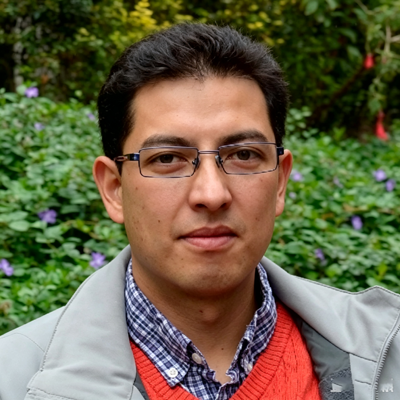
Assoc. Prof. Fredy O. Ruiz P.
Politecnico di Milano, Italy

Speech Title: Dealing With Uncertainty In Data-Based Learning: From Parametric Estimation To Black-Box Optimization

Abstract: Many science and engineering problems entail the derivation of mathematical models (learning) from prior information and data. A crucial aspect when learning models from data is handling the uncertainty caused by noisy and incomplete information. In this talk, we will explore Set Membership (SM) approaches, which provide a theoretical framework and practical tools for computing models with minimal uncertainty. In the case of numerical optimization, there are problems where both the objective function and the constraints have no closed-form expression or are too complex to be managed analytically, so that they can only be evaluated through experiments. To address such issues, we will describe a global optimization technique for problems with black-box objective and constraints within the Set Membership framework. The algorithm, named Set Membership Global Optimization with black-box constraints (SMGO-Δ), features tunable risk parameters, which the user can intuitively adjust to trade off safety, exploitation, and exploration.

Biography: Prof. Ruiz is an Associate Professor of Systems and Control at the Department of Electronics, Information and Bioengineering of Politecnico di Milano. He earned his Bachelor’s (2002) and Master’s (2005) degrees in Electronics Engineering from Pontificia Universidad Javeriana in Colombia, and completed his PhD (2009) at Politecnico di Torino, Italy. He served as Assistant Professor (2010–2014) and later Associate Professor (2015–2019) at Pontificia Universidad Javeriana, where he also held the position of Chair of the Electronics Engineering Department from 2014 to 2016. In 2019, he joined Politecnico di Milano as a tenured Associate Professor. Prof. Ruiz has been a visiting scholar at the University of California, Berkeley (2013) and at Politecnico di Torino (2018). His research focuses on data-driven methods for system identification, automatic control, and optimization. He has developed theoretical and computational frameworks for the analysis, design, and control of dynamical systems with incomplete information, leveraging data generated by the system itself, with applications in mechatronics, power electronics, smart grids, and industrial processes.


Assoc. Prof. Breiffni Fitzgerald
University of Dublin, Ireland

Speech Title: From Structural Control to Digital Twins: Dynamics and Learning in Offshore Wind Turbines

Abstract: The next generation of offshore wind turbines presents unprecedented challenges in structural dynamics, control, and reliability. As turbines grow taller and more flexible, dynamic coupling between aerodynamic, hydrodynamic, and structural loads becomes increasingly pronounced, demanding advanced strategies for vibration mitigation and real-time monitoring. This lecture explores the evolution of offshore wind turbine dynamics research from model-based control to data-driven intelligence. It begins with recent advances in vibration control using inerter-based tuned mass dampers, highlighting their potential to enhance robustness under stochastic wind and wave excitations. The talk then transitions to data-driven modelling and machine learning approaches for dynamic response prediction, virtual sensing, and fatigue estimation. By integrating physics-informed neural networks with high-fidelity aeroelastic simulations, this work aims to bridge the gap between analytical control design and digital-twin-based structural health monitoring. The lecture concludes with perspectives on reliability, uncertainty quantification, and future directions for intelligent, resilient offshore energy systems.

Biography: Dr Breiffni Fitzgerald is an Associate Professor in the Department of Civil, Structural and Environmental Engineering at Trinity College Dublin. He is also a Fellow of Trinity College Dublin. His research is at the forefront of structural dynamics and control, with a primary focus on wind energy systems. He applies methodologies that span from classical dynamic modelling to cutting-edge machine learning, advancing the performance, reliability, and climate resilience of wind energy systems. Dr Fitzgerald has published widely in top-tier journals and serves as an editor of Wind Energy, the leading international journal in the field. Dr Fitzgerald is currently the Director of Postgraduate Teaching and Learning for the School of Engineering. This senior management role involves shaping the postgraduate (PG) experience within the School for PG taught and research students. He leads doctoral education strategy, postgraduate policy development, and student experience initiatives across the School. He was awarded a TCD Teaching Excellence Award in 2023 in recognition of his contributions to research-led teaching and supervision. Dr Fitzgerald is a Chartered Engineer of the Institution of Engineers of Ireland and the American Society of Civil Engineers. He has been recognised with several industry awards, including a nomination for Chartered Engineer of the Year.